If you’ve lived in Anaheim more than a couple years, you’ve probably noticed the white crust on your showerhead, the film on your drinking glasses, or the fact that your soap never quite lathers the way it did when you visited family up north. That’s not your imagination, and it’s not your appliances being cheap. It’s the water.
Anaheim Public Utilities draws most of its supply from the Orange County groundwater basin, blended with imported water from the Colorado River during dry years. Both sources run hard — Anaheim’s water typically tests in the 12 to 16 grains-per-gallon range, which the Water Quality Association classifies as “very hard.” Compare that to a city like Portland or Seattle, where water runs 1 to 3 grains, and you start to understand why appliances that would last 12 years in the Pacific Northwest are dying at 7 or 8 here.
I’ve been pulling apart Anaheim dishwashers and washers for 14 years, and hard water is one of the most consistent, most preventable causes of early failure I see. Here’s what it’s actually doing to your machines.
What’s Happening Inside the Machine
Hard water carries dissolved calcium and magnesium. Every time your dishwasher or washer heats water — which is most cycles — those minerals come out of solution and deposit as scale, the same white crust you see on your fixtures, except now it’s forming inside components that were never designed to be descaled.
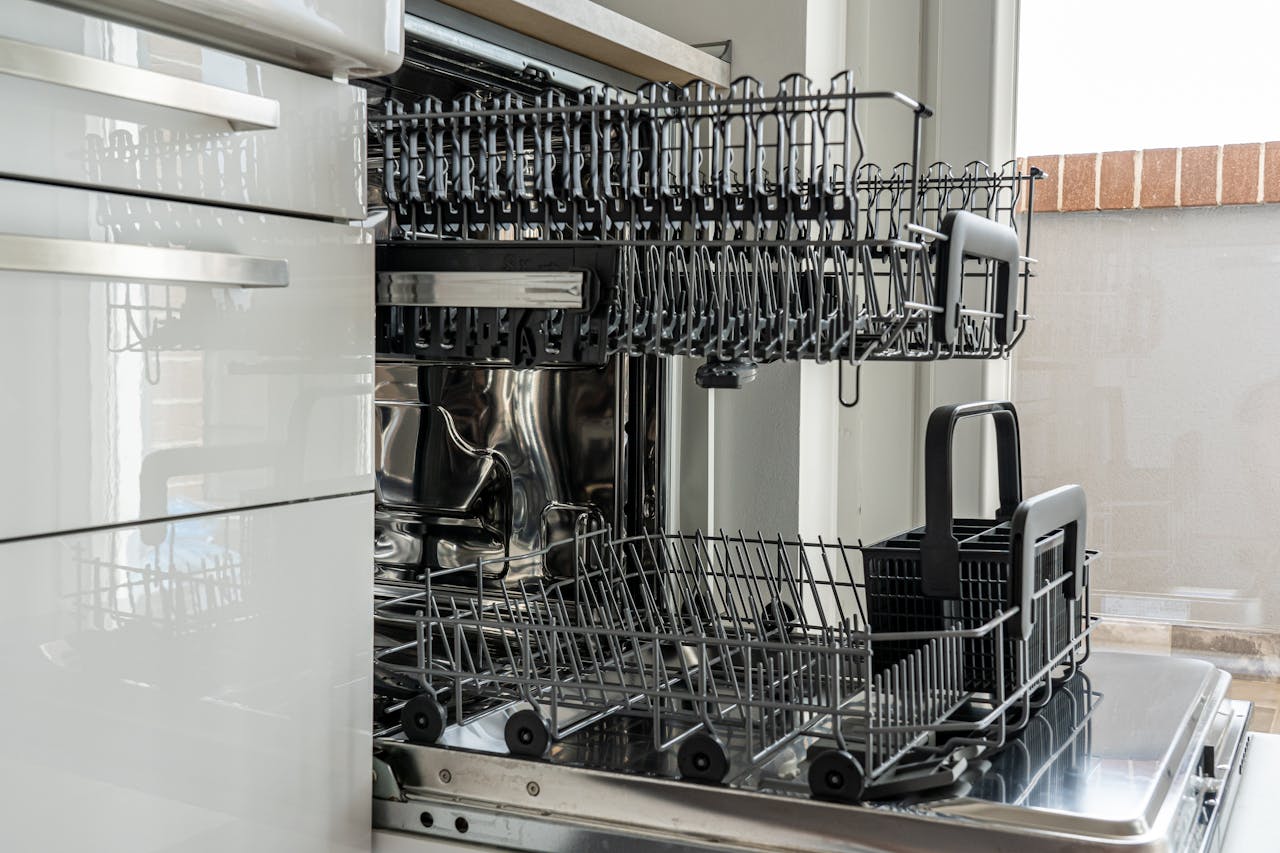
In a dishwasher, scale builds up on the heating element first. A scaled element has to work harder to reach temperature, which means longer cycles, more electricity, and eventually a burned-out element that trips the thermal fuse. From there it moves to the spray arm jets, which narrow and clog until wash performance drops even though “nothing’s broken” — you just stop getting clean dishes. The worst damage is usually invisible: scale accumulating inside the pump and the water inlet valve, where it eventually seizes moving parts. I’ve replaced more prematurely-failed inlet valves in Anaheim than in any other city I’ve worked.
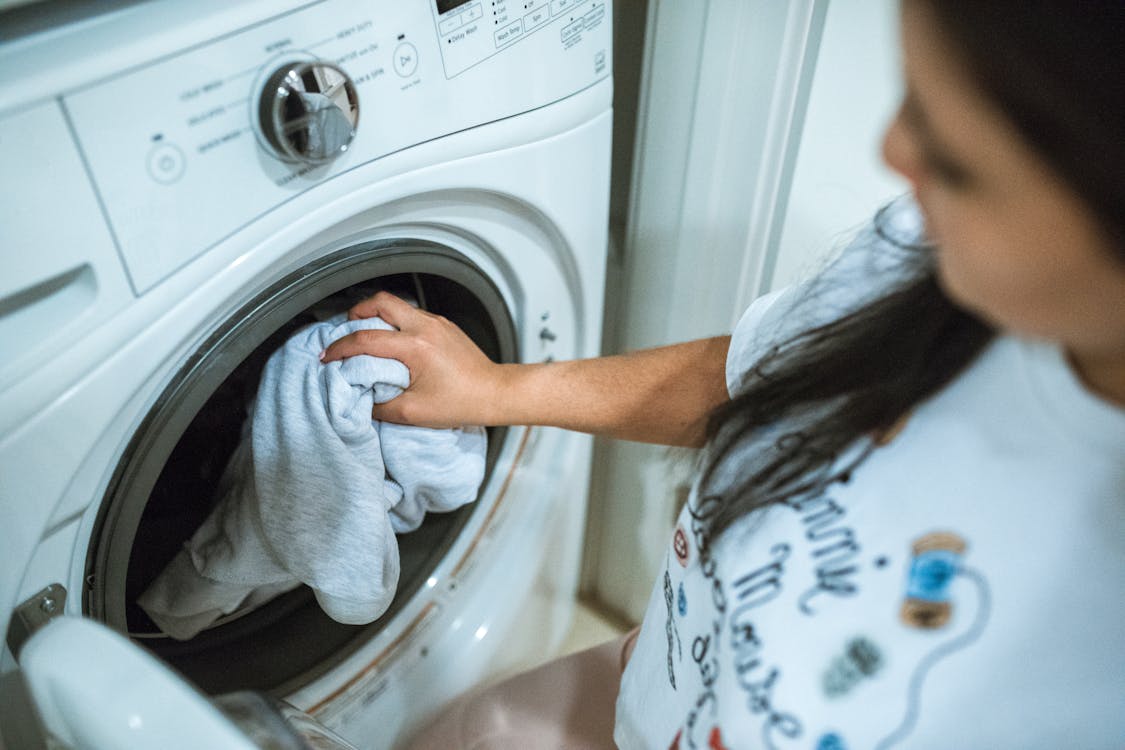
Washing machines take it from a different angle. Scale coats the heating element on machines that heat their own water, but the bigger issue is what hard water does to detergent. Hard water reacts with regular detergent to form a soap-scum residue that never fully rinses out. That residue builds up inside the drum, the door boot on front-loaders, and the drain pump — which is a major reason front-loading washers in this area develop the musty smell so many Anaheim homeowners complain about. It’s not really mold in most cases. It’s mineral-and-residue buildup that mold then colonizes.
Water heaters take the worst of it structurally, but that’s outside what we service directly. What I will say: if your water heater is scaling up, the water reaching your dishwasher and washer downstream is carrying whatever didn’t get filtered, which compounds the problem on the appliance end.
What Actually Helps
I’m not going to tell you a whole-house softener is mandatory — plenty of Anaheim households get by fine without one, especially if they follow a few habits:
Use detergent formulated for hard water, or add a water softening additive like Affresh or Calgon to your regular detergent. Standard detergent dosing instructions are usually written assuming moderate water hardness, which Anaheim is not.
Run a monthly cleaning cycle. For dishwashers, a dishwasher-safe bowl of white vinegar on the top rack, run on the hottest cycle empty, dissolves a surprising amount of scale before it hardens. For washers, an empty hot cycle with a washer-cleaner tablet or a cup of vinegar does the same job on the drum and pump.
Wipe the door gasket on front-load washers after use. Leaving the door cracked between loads matters everywhere, but it matters more here because mineral residue plus trapped moisture is a faster path to that smell than moisture alone.
If you install a whole-house softener, it pays for itself on appliances alone. I’ve seen enough scaled-out heating elements and seized valves in softener-free Anaheim homes to say this with confidence: a $1,500 to $2,500 softener system routinely adds years to a dishwasher, washer, and water heater simultaneously. It’s one of the few home upgrades I’d call an easy yes if you’re staying in the house more than five years.
Get scale flushed before it seizes something. If your dishwasher’s heating cycles are running long, or your washer’s water is coming out noticeably cooler than the setting, that’s often early scale on the element — a cheap fix now versus a full element or valve replacement in six months.
The Bottom Line
Hard water isn’t dramatic. It doesn’t cause a flood or a fire. It just quietly shortens the life of every water-using appliance in your house, one mineral deposit at a time, and most homeowners never connect the dots until a technician pulls a scaled-solid inlet valve out of a five-year-old machine.
If your dishwasher or washer is underperforming and you’re in Anaheim, Fullerton, Orange, Buena Park, Placentia, or anywhere in North Orange County, give us a call at (714) 243-8415. We’ll tell you honestly whether it’s scale, a failed part, or something else — our $89 diagnostic fee is waived if you move forward with the repair.
— Andrew Heimer, Anaheim Appliance Repair